
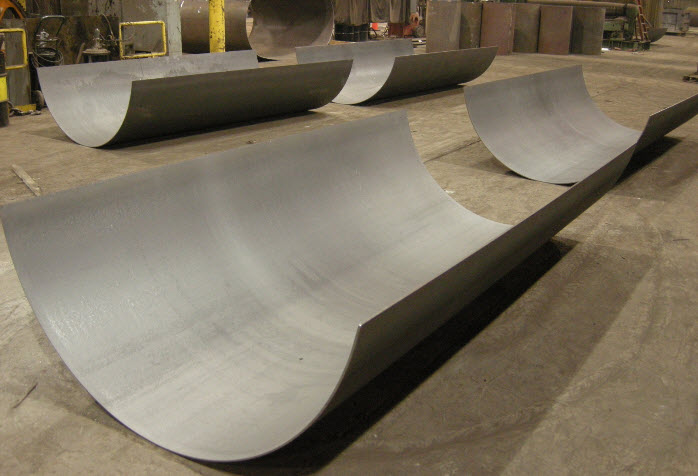
Custom steel rolling plays a critical role in industries that depend on large, curved, cylindrical, conical, or specially formed steel components. From pressure vessel shells and petrochemical equipment to curved structural steel and heavy-duty mining machinery, steel rolling allows manufacturers and fabricators to transform flat plate and structural sections into precise shapes built for demanding applications.
Industries that commonly rely on custom steel rolling include pressure vessel manufacturing, oil and gas, petrochemical processing, construction, infrastructure, mining, material handling, energy, and heavy equipment manufacturing.
For these applications, standard off-the-shelf components are not always sufficient. Projects may require a specific diameter, plate thickness, material grade, radius, structural profile, or finished geometry. Custom steel rolling gives OEMs and fabricators the flexibility to manufacture those components to project specifications.
What Is Custom Steel Rolling?
Custom steel rolling is the process of forming steel plate, sheet, or structural sections into curved shapes using specialized rolling equipment.
Depending on the application, steel can be rolled into:
- Cylinders and shells
- Cones and conical sections
- Rings and ring segments
- Curved beams, channels, angles, pipe, and tubing
- Large-diameter pipe sections and fittings
- Oval, elliptical, and multiple-radius shapes
- Custom transitions and other formed components
Arntzen Rolling provides plate rolling, forming, cutting, and welding capabilities for materials ranging from carbon and structural steel to pressure vessel quality, high-strength, abrasion-resistant, stainless, aluminum, nickel alloy, and other specialty grades.
The specific rolling method and equipment used depend on factors such as material type, plate thickness, width, diameter, radius, and the tolerances required for the finished component.
Why Do Industrial Manufacturers Need Custom Steel Rolling?
Industrial components often need to satisfy requirements that cannot be met by standard pipe, tubing, or structural products.
Custom rolling allows manufacturers to specify characteristics such as:
- Diameter
- Radius
- Plate thickness
- Material grade
- Width or overall length
- Cone geometry
- Structural profile
- Tangent length
- Weld preparation
- Roundness and dimensional tolerances
This flexibility is particularly important when components will become part of a larger fabricated assembly.
A pressure vessel manufacturer, for example, may need a rolled shell that will later be fitted with heads, nozzles, supports, and other components. A structural fabricator may instead need a beam rolled to a specific radius for an architectural or infrastructure project.
The rolling requirements are different, but the objective is the same: turning specified steel material into the geometry required by the finished system.
1. Pressure Vessel Manufacturing
How is steel rolling used in pressure vessels?
Steel rolling is commonly used to produce the cylindrical shells and conical sections that become major components of pressure vessels, tanks, and processing equipment.
Pressure vessels must contain liquids or gases under operating conditions that can place significant stress on the vessel structure. As a result, manufacturers need rolled components with consistent geometry, appropriate materials, and reliable traceability.
Common rolled components for pressure vessel applications include:
- Cylindrical vessel shells
- Shell courses
- Conical sections
- Reducers and transitions
- Rolled rings
- Heavy-wall cylinders
Pressure vessel projects may also require specialized plate grades selected for temperature, pressure, corrosion resistance, strength, or other operating conditions.
Arntzen rolls pressure vessel quality materials including grades such as SA516 Grade 70, SA537, SA387, SA240 stainless grades, carbon steel, stainless steel, nickel alloy, and Monel. The company supplies rolled shells to OEMs for oil and gas, chemical, and other pressure-vessel applications based on customer designs and specifications.
Why precision matters in pressure vessel rolling
Accurate rolling helps downstream fabricators maintain proper fit-up when joining shell sections or integrating additional vessel components.
Important considerations can include:
- Roundness
- Consistent curvature
- Joint alignment
- Material identification
- Mill test reports
- Traceability
- Weld preparation
A poorly formed shell can create additional fitting, welding, and fabrication work later in production. Working with an experienced plate rolling supplier can therefore help simplify downstream assembly.
2. Petrochemical, Oil & Gas and Chemical Processing
Where is rolled steel used in petrochemical facilities?
Petrochemical and chemical processing facilities rely heavily on cylindrical and curved steel equipment because many processes involve the storage, movement, heating, cooling, or treatment of liquids, gases, and bulk materials.
Custom rolled steel can be used to manufacture components for:
- Process vessels
- Tanks and storage systems
- Large-diameter piping systems
- Pipe fittings and transitions
- Industrial shells
- Cones and reducers
- Processing equipment
- Exhaust and duct systems
- Rotating equipment
Arntzen's plate rolling capabilities support petroleum, chemical, machinery manufacturing, and other industrial applications, including cylinders, cones, large-diameter rings, pipe fittings, segments, and specialty formed shapes.
Large-diameter components require specialized rolling capabilities
Many industrial processing applications require components significantly larger or thicker than standard manufactured pipe.
In these situations, manufacturers may begin with flat steel plate and have it rolled into the required diameter. Sections can then be welded and incorporated into larger assemblies.
This approach gives engineers and fabricators greater control over material selection, thickness, diameter, and finished dimensions.
Large-diameter pipe fittings can also be fabricated from rolled steel for applications that require elbows, transitions, reducers, or other custom geometries.
3. Construction and Structural Steel Fabrication
How is custom steel rolling used in construction?
Custom steel rolling allows structural fabricators to create curved steel members for buildings, infrastructure, architectural features, industrial structures, and other engineered projects.
Unlike plate rolling, structural rolling involves curving profiles such as:
- I-beams
- Channels
- Angles
- Tees
- Pipe
- Square or rectangular tubing
- Rails
Arntzen rolls structural steel into full rings or segments and can accommodate different rolling orientations, multiple radii, specified tangents, and other project-specific geometries.
Common applications for rolled structural steel
Rolled structural components may appear in:
- Curved roof systems
- Arches
- Industrial facilities
- Circular structures
- Equipment supports
- Stadium and arena structures
- Transportation infrastructure
- Architectural features
- Industrial platforms and frameworks
Structural steel rolling allows engineers and architects to incorporate curved forms without relying entirely on segmented straight members.
For industrial construction, rolled structural steel may also support equipment, tanks, conveyors, piping systems, or other heavy infrastructure.
4. Mining and Material Handling Equipment
Why does the mining industry use custom rolled steel?
Mining environments place extreme demands on equipment. Steel components may be exposed to abrasive materials, repeated impact, heavy loads, vibration, and continuous operation.
Custom rolling allows mining equipment manufacturers to form heavy-duty components from materials selected for strength and wear resistance.
Typical applications can include:
- Rotating drums
- Equipment shells
- Chutes and troughs
- Material handling systems
- Conveyor components
- Hoppers
- Equipment housings
- Cylinders
- Cones and transitions
- Wear-resistant fabricated assemblies
Arntzen works with abrasion-resistant and high-strength materials in addition to conventional structural and carbon steel, supporting heavy industrial and material-handling applications where durability is a key requirement.
Abrasion-resistant steel rolling
Material selection is particularly important in mining.
Grades engineered for abrasion resistance can extend component life in applications where rock, aggregate, ore, sand, or other bulk materials repeatedly contact steel surfaces.
However, high-strength and abrasion-resistant materials can also present different forming characteristics than conventional mild steel. Plate thickness, material properties, required radius, and equipment capacity must therefore be considered before rolling begins.
An experienced steel rolling partner can evaluate the project specifications and determine the appropriate forming approach.
Other Industries That Depend on Custom Steel Rolling
Pressure vessels, petrochemical processing, construction, and mining are only part of the market for rolled steel.
Custom steel rolling is also widely used throughout:
|
Industry |
Common Rolled Components |
|
Energy and power generation |
Shells, cylinders, rings, ducts and specialty formed components |
|
Heavy equipment |
Housings, drums, cylinders and structural components |
|
Material handling |
Chutes, drums, troughs, cones and conveyor components |
|
Tank manufacturing |
Cylindrical shells, rings and cones |
|
Infrastructure |
Rolled structural members, pipe sections and fabricated components |
|
OEM manufacturing |
Custom production components built to equipment specifications |
|
Water and wastewater |
Tanks, piping components, transitions and processing equipment |
|
Industrial processing |
Rotating drums, shells, cylinders and specialty shapes |
The common denominator across these industries is the need for large, precisely formed steel components that must integrate into engineered equipment or structures.
Choosing a Custom Steel Rolling Partner
Not every rolling facility has the equipment needed for large-diameter, heavy-plate, wide-plate, or specialty-material projects.
When evaluating a steel rolling supplier, manufacturers and fabricators should consider several factors.
Rolling capacity
Confirm that the facility can accommodate the required:
- Plate thickness
- Plate width
- Diameter
- Radius
- Material grade
- Component length and weight
Material experience
Carbon steel behaves differently during forming than stainless steel, high-strength steel, pressure vessel plate, or abrasion-resistant material.
A rolling supplier familiar with multiple material categories can help reduce forming challenges.
Dimensional control
Roundness, curvature, radius consistency, tangents, and joint fit-up can directly affect downstream fabrication.
Additional fabrication capabilities
Cutting, press brake forming, beveling, fitting, and welding can reduce the number of vendors involved in a project.
Production capacity
Large OEM programs and time-sensitive fabrication projects may also require a supplier capable of handling both one-off components and repeat production.
Arntzen operates specialized plate rolling equipment capable of producing cylinders, cones, rings, structural shapes, pipe fittings, and other custom rolled forms for OEMs, fabricators, job shops, and industrial end users.
Custom Steel Rolling for Demanding Industrial Applications
Custom steel rolling is a foundational manufacturing process behind many of the vessels, structures, machines, and processing systems used throughout heavy industry.
Pressure vessel manufacturers rely on rolled shells and cones. Petrochemical facilities depend on large cylindrical and piping components. Construction projects use curved structural steel. Mining equipment manufacturers require durable rolled components capable of operating in abrasive environments.
Each industry presents different engineering challenges, but all require the ability to transform steel into precise, project-specific shapes.
With decades of steel rolling experience, Arntzen Rolling supports OEMs and fabricators with custom plate rolling, structural rolling, forming, and welding for projects ranging from individual components to large production requirements.
Need a custom rolled steel component for an upcoming project? Contact Arntzen Rolling to discuss your drawings, material requirements, dimensions, and production needs.
Frequently Asked Questions About Custom Steel Rolling
What industries use custom steel rolling?
Custom steel rolling is used throughout pressure vessel manufacturing, oil and gas, petrochemical processing, construction, mining, energy, infrastructure, material handling, tank manufacturing, heavy equipment, and OEM manufacturing.
What products can be made through steel plate rolling?
Steel plate can be rolled into cylinders, shells, cones, rings, pipe sections, reducers, transitions, troughs, ovals, elliptical shapes, and other custom curved components.
What is the difference between plate rolling and structural steel rolling?
Plate rolling forms flat steel plate or sheet into curved components such as cylinders, cones, and shells. Structural steel rolling curves existing structural profiles such as beams, channels, angles, pipe, tubing, tees, and rails.
How is steel rolling used for pressure vessels?
Pressure vessel manufacturers use steel plate rolling to create cylindrical shells, shell courses, cones, reducers, rings, and other formed sections. These components can then be incorporated into completed pressure vessels based on the manufacturer's engineering specifications.
Can abrasion-resistant steel be rolled for mining equipment?
Yes. Abrasion-resistant grades can be formed for mining and material-handling applications, although the material grade, thickness, required radius, and equipment capabilities must be considered during the forming process.
Can thick steel plate be rolled into large-diameter cylinders?
Yes. Heavy plate can be rolled into large-diameter cylinders when the rolling equipment has sufficient capacity for the material thickness, width, diameter, and grade involved. Arntzen's plate rolling capabilities include heavy and wide plate for large industrial components.
What information is needed to quote a custom steel rolling project?
A rolling supplier will typically need information such as the material grade, thickness, width, finished diameter or radius, component length, quantity, tolerances, weld requirements, and applicable drawings or specifications. Providing detailed project drawings can help the rolling supplier evaluate manufacturability and develop an accurate quote.